SURPRISING
ENGAGING
LIFE CHANGING
REFRESH YOUR APPROACH TO YOURSELF
LEARN THE ALEXANDER TECHNIQUE
MONTHLY CLASSES WITH TIMOTHY GORDON
Download brochure from here (PDF file, 55KB)
WHAT IS THE ALEXANDER TECHNIQUE?
The Alexander Technique is a method of analysis, assessment and re-education. It addresses postural malfunctioning and teaches new ways to think in action. The principles of the technique promote change to the habitual way of doing things that may cause discomfort or have harmful long term effects. The technique works very much in aligning the skeletal body and gives directions to assist in creating ease and care while moving at work, daily life or within the demands of a specific profession.
It is a method that will assist you to move with greater freedom, balance and coordination, giving you, over time, greater satisfaction from life. It assists ergonomically in analysing repetitive movement and how best to manage yourself in a working environment.
The Alexander Technique teaches through the principle of allowing (non-doing) to create an ease and length through the spine and a widening of the ribs, shoulder girdle and back.
One major emphasis is on neck tension which can manifest throughout the body. By working on the relationship of head, neck and torso in a particular sequence you will allow the limbs to “unfix” and work for you rather than against you.
Any holding or restrictive patterns in movement and breath can be remedied, thereby helping to restore the body’s own coordination and improve function. Use effects function.
Use effects functioning. Many ailments are improved using the Alexander Technique. Breathing difficulties, asthma, excessive neck and shoulder tension, headaches, anxiety, tension disorders, restriction in movement, back pain, all can improve with smarter movement and posture.
The Alexander Technique is not just about being at ease with oneself, but consciously directing oneself in everyday activity in order to protect and function at the most optimal level.
TIMOTHY GORDON – Dancer, Choreographer, Dance Teacher
Timothy began practicing the Alexander Technique in Perth in (1992) while he was teaching and choreographing at WAAPA Edith Cowan University where he was also teaching movement to actors on the Theatre Degree. Hugh Jackman was one of his students at that time.
Timothy decided to investigate the Alexander Technique further and went to New Zealand to study with the gifted Israeli teacher, Zvi Lavie. He integrated the principles of the Alexander Technique into his choreographic language and teaching practice during the inauguration of COMPANY Z DANCE IN New Zealand in 1994.
Europe called. Timothy then went overseas to develop his dance career, and resumed his studies in the Alexander Technique in Switzerland. He qualified as a SVLAT – STAT teacher of the Alexander Technique in 1998.
Timothy has taught the technique in ballet schools, opera and dance companies, acting courses and acting degrees, privately and in group practice ever since. He received a research grant at Auckland University to explore the effects of the technique on dance training (2001). He has taught the Alexander Technique discipline in many major academic and professional institutions in Europe, Asia, Australia and New Zealand.
- The way we react and use ourselves as a whole affects the quality and way that we function in our daily lives
- To see yourself, the individual, as a complete and harmonious entity, all the parts working in coordination with each other as one
- Reclaiming our natural governance and gracefulness in motion. What we have covered up with habit
- The unblocking and reestablishing of awareness and proprioception as a sensory skill for every day life, to avoid injury and pain
- Practising giving ourselves choice by consciously pausing and refraining to act impulsively
- Self-directing pathways to balance and coordination
- Rediscovering personal dignity by prioritizing what is most supportive for ourselves while we work
- Trusting and allowing the integrity and intelligence of our innate selves to shine
- Everyone who is interested in self development, from child to adult
- Anyone wishing to improve their general co-ordination, posture and awareness
- People in a profession where their own movement requires care and direction
- Dancers, Actors, singers, musicians, artists, teachers and anyone in the public eye
- People with breathing or vocal difficulties and excessive tension
- People who suffer from pain related to mis-use of the body and postural habits, including back, neck and shoulder pain
- People to cope with situations of undue or extended physical or emotional stress
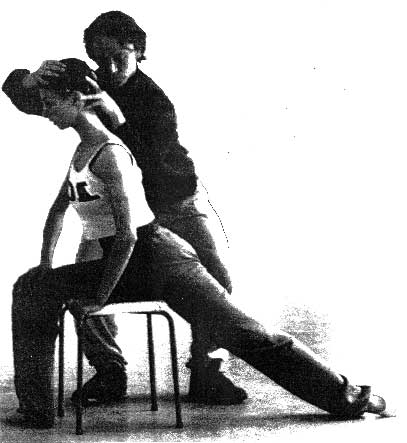
TIMOTHY GORDON and Mercedes Villanueva
+61 41 517 8147
tmg.dans@gmail.com